Sterile Compounding · Quality & Compliance

Sterility Testing That Starts Before the Sample: Choosing the Right SCDM and Capsule Filters for USP <71> Compliance

How BD BBL™ Trypticase™ Soy Broth (Cat. 211768) and Whatman Cytiva Polycap™ Capsule Filters work together to give compounding pharmacies a defensible, reproducible sterility testing workflow — from media preparation through final filtration.

April 11, 2026 Quality Control & Lab Supplies 12 min read

Most discussions of USP <71> sterility testing focus on what happens in the incubator: 14 days of observation, two media types, a pass/fail read at the end. But for compounding pharmacies serious about defensible results, sterility assurance actually begins much earlier — at the moment the culture medium is prepared and sterilized. The quality of media going into the test is just as critical as the conditions of the test itself.

This post examines how two product lines — BD BBL™ Trypticase™ Soy Broth (Catalog 211768) and the Whatman Cytiva Polycap™ capsule filter series — work in tandem across the sterility testing workflow: from reconstituting and sterilizing bulk SCDM media through to filtering compounded sterile preparations (CSPs) in compliance with USP <71> and USP <797>.

Why SCDM quality is the foundation of reliable sterility testing

Soybean Casein Digest Medium (SCDM), also called Tryptic Soy Broth (TSB), is one of two culture media mandated by USP <71> for sterility testing. Incubated at 20–25°C for 14 days, it detects aerobic bacteria and fungi — including all three of the reference organisms specified in the USP growth promotion test for SCDM: Aspergillus brasiliensis, Bacillus subtilis, and Candida albicans. Before any batch of SCDM is used in a sterility test, USP <71> requires that it pass a growth promotion test demonstrating visible microbial growth within the specified timeframe.

This means the medium itself must be nutritionally complete, correctly prepared at the right concentration, and sterilized without damaging its growth-promoting components. Substandard media — whether from inconsistent formulation, improper sterilization, or contamination during preparation — is a direct path to false-negative results, failed method suitability, and regulatory findings.

USP <71> requires that every lot of culture medium pass growth promotion testing before use. Dehydrated media that conforms to harmonized USP/EP/JP specifications — and that carries documented lot-by-lot QC — is the only appropriate starting point for a compliant sterility program.

Product spotlight: BD BBL™ Trypticase™ Soy Broth

BD BBL™ Trypticase™ Soy Broth is the industry-standard dehydrated SCDM used in pharmaceutical quality control laboratories worldwide. It is explicitly listed in the United States Pharmacopeia as a sterility test medium and for use in microbial enumeration testing — making it a natural, defensible choice for compounding pharmacies preparing SCDM in-house for USP <71> compliance. Its rich dual-peptone formulation supports growth of aerobic, facultative, and anaerobic bacteria as well as fungi, covering all USP <71> reference test strains. It conforms to harmonized USP, EP, and JP specifications, and has been validated across AOAC, BAM, CLSI, ISO, and USDA standards.

Catalog No.211768
FormatDehydrated powder
Pack size500 g
CompendialUSP / EP / JP
Incubation temp.20–25°C
Incubation duration14 days
pH (prepared)7.3 ± 0.2
Preparation30 g/L in purified water
Pancreatic Digest of Casein17.0 g
Papaic Digest of Soybean3.0 g
Sodium Chloride5.0 g
Dipotassium Phosphate2.5 g
Dextrose2.5 g
Harmonized pharmacopeial complianceMeets USP, EP, and JP specifications — acceptable to inspectors across all major regulatory jurisdictions.
Broad-spectrum growth supportDual-peptone formulation promotes growth of fastidious and non-fastidious organisms, including all USP <71> reference test strains.
Lot-documented QCEach lot is tested for growth promotion by BD prior to release, supporting your in-house growth promotion records.
Flexible preparationDehydrated format allows preparation of precisely the volume needed, minimizing waste and media hold-time issues.

BD Cat. 211768 is also recommended by the USDA APHIS for detecting viable bacteria in live vaccines, and complies with AOAC, BAM, CLSI, EP, EPA, ISO, JP, SMD, and USP standards — making it one of the most broadly validated SCDM formulations available for pharmaceutical use.

Order as: BD 211768  ·  Available from Fisher Scientific, VWR, McKesson, and authorized BD distributors

From powder to sterile medium: where capsule filters come in

Once BD Trypticase™ Soy Broth is reconstituted in purified water, it must be sterilized before use. Most compounding pharmacy laboratories sterilize liquid SCDM by autoclaving (15 minutes at 121°C) or by membrane filtration through a 0.22 µm capsule filter — the latter being preferred when heat-sensitive additives are present or when preparing smaller volumes for immediate use. This is precisely the first and critical application for the Whatman Cytiva Polycap™ capsule filter series: sterilizing the culture medium itself, before it ever touches a test sample.

A second role for capsule filters emerges during the USP <71> membrane filtration method: the compounded product being tested is passed through a sterilizing-grade capsule filter under aseptic conditions, trapping any microorganisms, which are then transferred to culture media for 14-day incubation. Choosing filters purpose-built for pharmaceutical filtration — with pre-sterilized, thermally fused, biosafe housings and documented integrity testing — is essential for both applications.

Product spotlight: Whatman Cytiva Polycap™ AS capsule filters

Cytiva (Whatman) · Capsule Filtration

Whatman™ Polycap™ AS Capsule Filter — Aqueous Solutions Series

Nylon membrane · 0.2 µm · GMF Prefilter · Pre-sterilized

The Polycap AS (Aqueous Solutions) series combines a glass microfiber (GMF) prefilter with a 0.2 µm nylon final membrane inside a thermally fused polypropylene housing — with no glues, adhesives, or mold-releasing agents that could leach into the filtrate. Designed for high-volume sterile filtration of aqueous solutions, it is the workhorse choice for sterilizing reconstituted BD Trypticase™ Soy Broth and other pharmaceutical culture media prior to use in USP <71> testing. The nylon membrane is inherently hydrophilic (no pre-wetting required), low in extractables, and biosafe, with an effective filtration area of 400 cm².

Cat. 6705-3602

Polycap AS 36 — Standard (no filling bell) 0.2 µm nylon + GMF prefilter. ¼”–⅜” hose barb inlet and outlet. For peristaltic pump or pressure filtration into closed receiver vessels.

Cat. 6706-3602

Polycap AS 36 — With Filling Bell Same 0.2 µm nylon + GMF configuration, plus a protective filling bell at the outlet to shield the receiver vessel from airborne contamination during media transfer into open bottles.

MembraneNylon (hydrophilic)
Pore size0.2 µm
PrefilterGMF (glass microfiber)
Filter area400 cm²
HousingPolypropylene (thermally fused)
Connections¼”–⅜” stepped barb
SterileYes (pre-sterilized)
Integrity testBubble point / pressure decay
No adhesives or gluesThermally fused PP housing eliminates extractables from bonding agents that could inhibit microbial growth in prepared media.
Dual-layer protectionGMF prefilter extends nylon membrane life when filtering particulate-laden broth reconstituted from dehydrated powder.
Integrity-testableSupports bubble point, pressure decay, and forward flow testing for complete validation documentation in your quality system.
Filling bell optionThe 6706-3602 variant protects the receiver vessel during open-bottle media filling, reducing the risk of environmental contamination.
Catalog Nos.: 6705-3602 6706-3602

For biologics-sensitive applications: Polycap™ TC (PES) series

Cytiva (Whatman) · Capsule Filtration

Whatman™ Polycap™ TC Capsule Filter — Tissue Culture / Low-Protein-Binding

Dual-layer PES membrane · 0.8/0.2 µm · Filling Bell · Pre-sterilized

The Polycap TC series is Cytiva’s solution for filtration of biologically sensitive aqueous solutions where protein retention must be minimized. The dual-layer polyethersulfone (PES) membrane — a 0.8 µm clarifying layer followed by a sterilizing 0.2 µm final membrane — delivers high throughput and efficient bacteria and fungi removal while maintaining extremely low protein adsorption (HSA: 0.4 µg/cm²; Insulin: 2.0 µg/cm²; Gammaglobulin: 1.5 µg/cm²). This makes the Polycap TC the filter of choice when sterilizing enriched or protein-supplemented SCDM variants, or for direct filtration of biological CSPs during USP <71> membrane filtration sterility testing. Catalog 6715-3682 includes a filling bell to protect the receiving vessel during open-air filling operations.

MembranePES (dual-layer)
Pore sizes0.8 µm + 0.2 µm
Filter area380 cm²
HousingPolypropylene (fused)
Max pressure60 psi / 4.1 bar
Connections¼”–⅜” stepped barb
EndotoxinLAL tested ≤0.5 EU/mL
QMSISO 9001
SterileYes (pre-sterilized)
Filling bellIncluded
HIMA challenge testedMeets the sterilizing-grade filter bacterial retention challenge test — directly supporting USP <71> method suitability documentation.
Low protein bindingMinimal loss of growth factors during media filtration preserves the nutritional integrity of SCDM for growth promotion testing.
1% integrity-tested at manufactureResults correlated to microbial retention — providing a starting documentation trail for your validation files.
Endotoxin controlledLAL-tested at ≤0.5 EU/mL ensures the filter itself does not introduce endotoxin burden into sterilized media or test samples.
Catalog No.: 6715-3682  ·  Polycap TC 36, PES, 0.8/0.2 µm, sterile, with filling bell

How the products fit the USP <71> workflow end-to-end

Understanding exactly where each product belongs in the process eliminates guesswork and supports a complete, auditable SOP.

Step 1 — Media preparation: Reconstitute BD BBL™ Trypticase™ Soy Broth (Cat. 211768) at 30 g/L in purified water. The dehydrated format allows batch-controlled preparation of precisely the volume required for your testing schedule, minimizing waste and media hold-time concerns.

Step 2 — Media sterilization by filtration: Pass the reconstituted SCDM through a pre-sterilized Polycap AS 36 (Cat. 6705-3602 or 6706-3602) at 0.2 µm using a peristaltic pump or pressure source. The GMF prefilter removes particulates from the broth, extending membrane life and preventing premature clogging. Use Cat. 6706-3602 (with filling bell) when dispensing directly into open media bottles to maintain asepsis at the point of transfer. For protein-enriched or biologically sensitive SCDM variants, the Polycap TC (Cat. 6715-3682) is the superior choice, given its low-protein-binding PES membrane and LAL-tested endotoxin performance.

Step 3 — Growth promotion verification: Inoculate a portion of sterilized BD Trypticase™ Soy Broth with the USP <71> reference organisms (Aspergillus brasiliensis, Bacillus subtilis, Candida albicans) and confirm visible growth within the specified incubation periods. Document lot numbers, preparation date, sterilization method, and results in your growth promotion records.

Step 4 — USP <71> sterility testing: For membrane filtration sterility tests, pass the CSP through a validated sterilizing-grade capsule filter (0.45 µm nominal). Rinse the membrane at least three times with validated sterile flush fluid, then add the sterilized BD Trypticase™ Soy Broth and Fluid Thioglycollate Medium for 14-day incubation — SCDM at 20–25°C, FTM at 30–35°C.

Ready to standardize your USP <71> media program?

Source BD BBL™ Trypticase™ Soy Broth (211768) and Whatman Cytiva Polycap™ capsule filters through your authorized distributor — or contact us for volume pricing and SOP consultation.

Request a quote →

A note on method suitability and filter validation

USP <71> requires that the sterility test method be validated for suitability against each product formulation. For compounding pharmacies using membrane filtration, this validation includes confirming that the capsule filter does not retain or destroy the USP reference organisms at levels that would compromise test sensitivity. The Polycap TC series, with its documented HIMA challenge test performance and 1% per-unit integrity testing, provides a strong starting point for this validation documentation. Any change in filter type, membrane material, or pore size requires re-validation of method suitability before continued use in sterility testing.

Similarly, any change in the SCDM supplier or lot that results in altered growth promotion performance must be investigated and documented before that medium is used in a sterility test. The consistent, harmonized formulation of BD Cat. 211768 — supported by BD’s own lot release QC — reduces the likelihood of inter-lot variability and simplifies your growth promotion records.


Scientific references

[1] United States Pharmacopeial Convention. USP General Chapter <71> Sterility Tests. USP–NF, current edition. Rockville, MD: USP.

[2] United States Pharmacopeial Convention. USP General Chapter <797> Pharmaceutical Compounding — Sterile Preparations. Official November 1, 2023. Rockville, MD: USP.

[3] BD Diagnostics. Product Insert: BBL™ Trypticase™ Soy Broth (Soybean–Casein Digest Medium), Catalog No. 211768. Becton, Dickinson and Company; Franklin Lakes, NJ.

[4] Cytiva (Whatman). Polycap AS Capsule Filter Product Documentation. Catalog Nos. 6705-3602, 6706-3602. Cytiva Life Sciences.

[5] Cytiva (Whatman). Polycap TC Capsule Filter Product Documentation. Catalog No. 6715-3682. Cytiva Life Sciences.

[6] Corbet S, et al. Sterility testing of cellular therapy products: what is the role of the clinical microbiology laboratory? Journal of Clinical Microbiology. 2020;58(7):e00045-20. doi:10.1128/JCM.00045-20.

[7] Sutton S. Laboratory considerations of USP Chapter <71> sterility tests. International Journal of Pharmaceutical Compounding. 2018;22(2).

[8] Food and Drug Administration. Guidance for Industry: Sterile Drug Products Produced by Aseptic Processing — Current Good Manufacturing Practice. FDA; September 2004.

[9] United States Pharmacopeial Convention. USP General Chapter <1211> Sterility Assurance. USP–NF, current edition. Rockville, MD: USP.

[10] European Directorate for the Quality of Medicines (EDQM). European Pharmacopoeia, Chapter 2.6.1: Sterility. 11th ed. Strasbourg: Council of Europe; 2023.

Keywords: USP 71 sterility testing compounding pharmacy, BD Trypticase Soy Broth 211768, SCDM USP compounding, Whatman Polycap capsule filter 6705-3602 6706-3602 6715-3682, Cytiva Polycap AS PES nylon sterile, membrane filtration media sterilization, USP 797 sterility media, soybean casein digest medium compounding, capsule filter media sterilization pharmacy, sterile culture media preparation
IVPACKS can help you crimp your flip cap vial seals !

Having problems crimping your Flip Off® vial seals? IVPACKS can help!

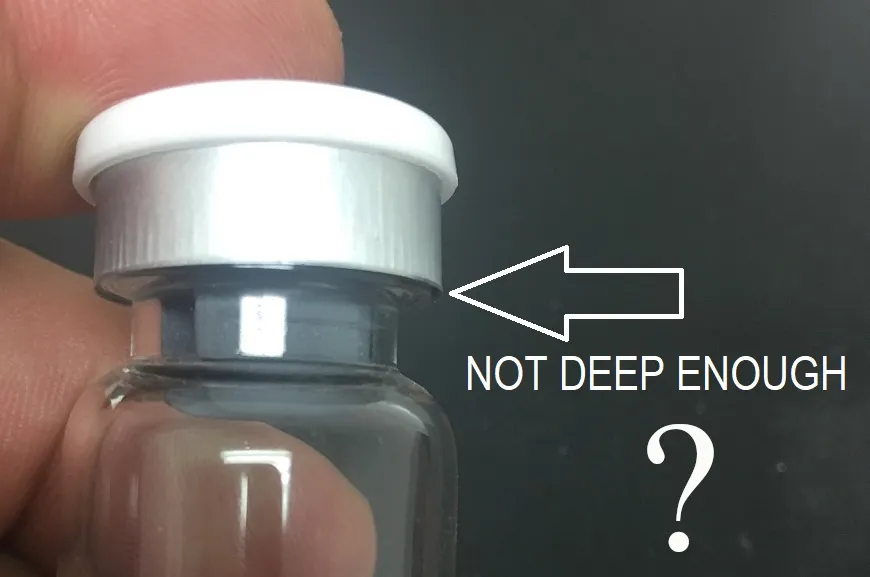
Over the years, we have occasionally received complaints from customers when they try to crimp 13mm or 20mm flip cap vial seals (aluminum vial seals with a plastic lid). There are 4 components that must be taken into consideration:

1). The thickness of the top crown crimp lip (rim) of the vial.

This is seldom the cause of the issue. The only exceptions we have seen are for non-standard, non ISO vials (which is rarely an issue for USA clients). If you are using ISO standard vials, move on to one of the issues below.

2). The thickness of the stopper flange (top flat portion).

Some lyophilization style stoppers (2 or 3 prong stoppers and some igloo vial stoppers) will occasionally have a thicker top flange.

3). The aluminum skirt length of the flip cap vial seal.

The usual rush to judgement is that the aluminum skirt length isnt long enough to allow proper crimping. If you are using any 13mm or 20mm flip cap vial seals sourced from IVPACKS, this shouldnt be the issue. All flip cap seals sourced from IVPACKS are of appropriate shell skirt length for proper crimping.

4). The specific type of crimper being used (manual, electric, pneumatic or rotary vial crimper).

IVPACKS offers adjustable crimpers for 13mm flip cap and 20mm flip cap seals:

  • Crimper 13002 – for 13mm flip cap / 13mm flip off vial seals, or
  • Crimper 20002 – for 20mm flip cap / 20mm flip off vial seals

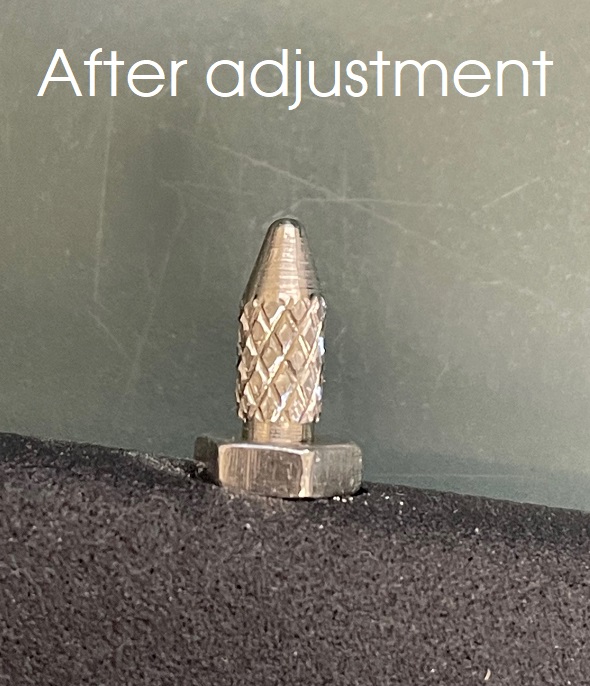
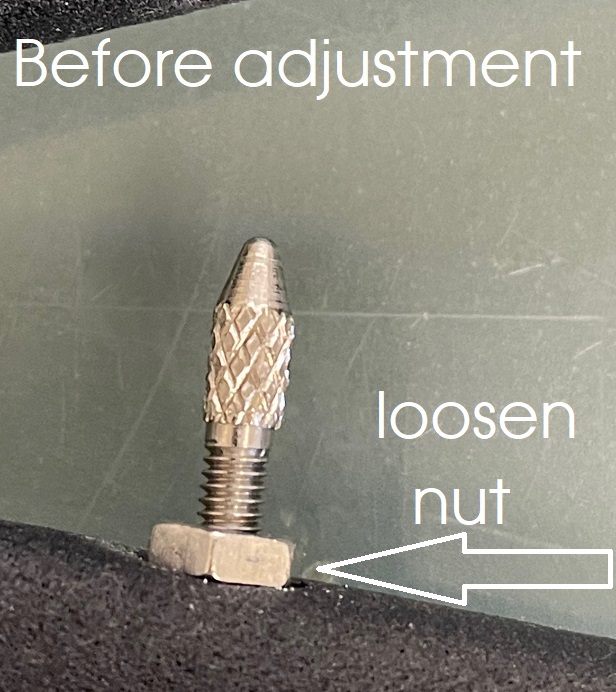
Both of the above flip cap vial crimpers have a “percussion pin” that allows the user to manually adjust the crimping depth. In the image below, you can see the standard initial setting of the percussion pin:

Loosen the nut of the percussion pin located midway along the handles of the crimper. Then, lower the height of the percussion pin as you see in the image below:

The adjustment of the percussion pin in our manual vial crimpers will resolve the problem in the majority of cases. If you are not using our adjustable crimpers, consider buying one (NOTICE – there are separate crimpers for 13mm or 20mm flip cap vial seals). If your crimping volumes are too large for manually operated crimpers, you will need to speak to the manufacturer of the automatic crimpers you are using.

BUY OUR ADJUSTABLE VIAL CRIMPERS BELOW

13mm Flip Cap Vial Crimpers HERE

or

20mm Flip Cap Vial Crimpers HERE

Have any questions – please send us an email: sales@IVPACKS.com

Amber ISO 6R Clear and Amber Sterile Vials, Open Sterile Ready to Fill / Ready to Use, in Nested Trays

IO 6R Open Sterile Nested Vials

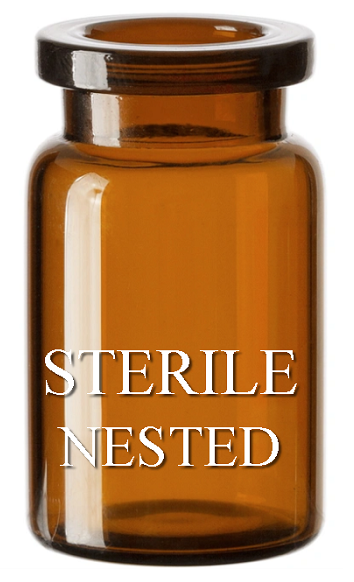
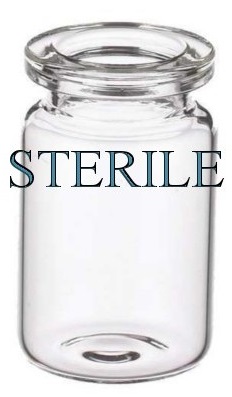
Clear or Amber USP Type 1 borosilicate sterile glass vials with a standard 20mm crimp finish (13mm hole opening x 20mm outer rim diameter). Outside diameter x height: 22x40mm

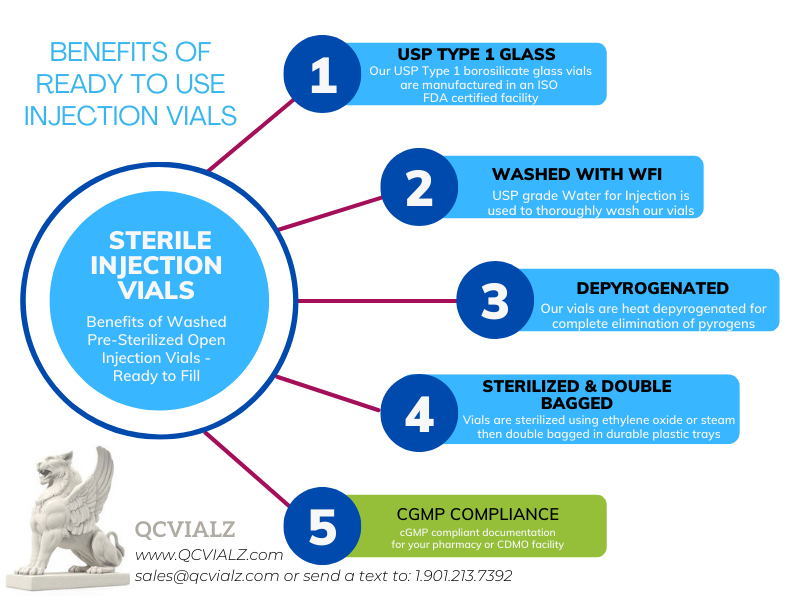
USP Type 1 borosilicate glass vials are formed and then washed using USP Water for Injection (WFI) by Gerresheimer®. The washed vials are depyrogenated using heat, and then sterilized using ethylene oxide by SteriGenics®. The finished vials are arranged in durable nested plastic trays and hermetically sealed.

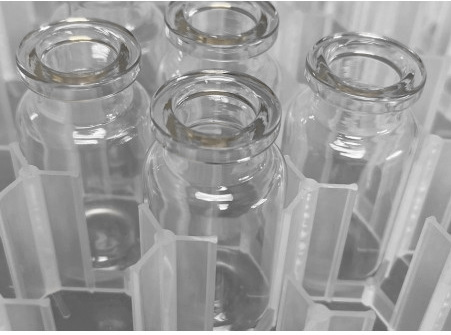
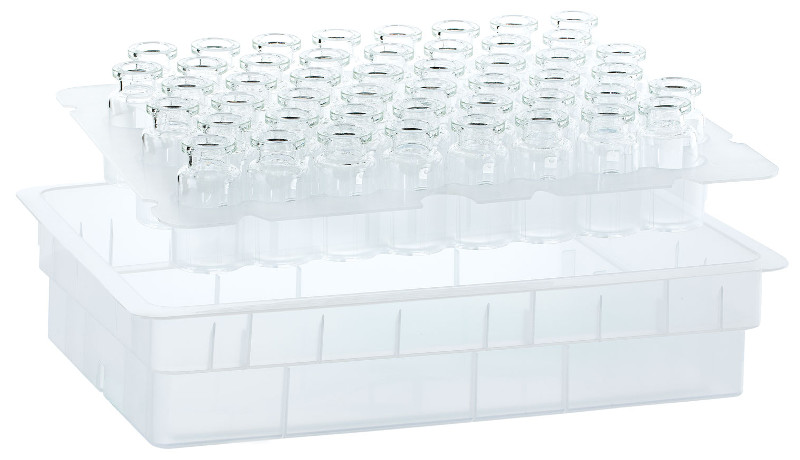
ISO 6R 5ml 6ml open sterile vials in a alveolar style nested tray of 96 pieces

NESTED TRAYS: unique nested tray (alveolar style tray) keeps glass vials from touching one another during transit and storage. This designs greatly reduces the chances of scratches or damages. The nested tray can also serve as a sterile vial rack during the filling process in your cleanroom.

With each paid order, IVPACKS customers will receive a certificate of conformance will be prepared. The certificate of conformance will contain the following elements:

▪ EtO residual determination, ISO 10993-7, Current Edition.

▪ Sterilization process conformance, ISO 11135, Current Edition.

▪ Sterility testing conformance, USP <71>, Current Edition

▪ Bacterial endotoxins, NMT 0.125 EU/mL, USP <85>, Current Edition

▪ Commercial information (order, date of production, quantity, glass tubing, etcetera).

Single sealed nested tray of 96 pieces

ISO 2R Amber Sterile Vials in Nested Trays

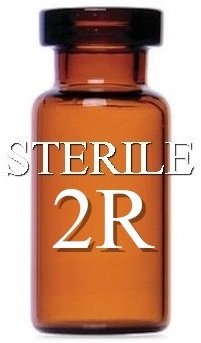
ISO 2R amber sterile vials, open, ready to fill, in nested trays of 228 pieces.

Amber ISO 2R Amber Sterile Vials, Open Sterile Ready to Fill / Ready to Use, in Nested Trays 

Amber USP Type 1 borosilicate glass vials with a standard 13mm crimp finish (7mm hole opening x 13mm outer rim diameter).

Outside diameter x height: 16x35mm

USP Type 1 borosilicate glass vials are formed and then washed using USP Water for Injection (WFI) by Gerresheimer®. The washed vials are depyrogenated using heat, and then sterilized using ethylene oxide by SteriGenics®. The finished vials are arranged in durable nested plastic trays and hermetically sealed.

NESTED TRAYS: unique nested tray (alveolar style tray) keeps glass vials from touching one another during transit and storage. This designs greatly reduces the chances of scratches or damages. The nested tray can also serve as a sterile vial rack during the filling process in your cleanroom. 

With each paid order, IVPACKS customers will receive a certificate of conformance will be prepared. The certificate of conformance will contain the following elements:

▪ EtO residual determination, ISO 10993-7, Current Edition.

▪ Sterilization process conformance, ISO 11135, Current Edition.

▪ Sterility testing conformance, USP <71>, Current Edition (Method: Direct inoculation).

▪ Bacterial endotoxins, NMT 0.125 EU/mL, USP <85>, Current Edition.

▪ Commercial information (order, date of production, quantity, glass tubing, etcetera).

Single sealed nested tray of 228 pieces 

ORDER ISO 2R AMBER NESTED STERILE VIALS AT IVPACKS

STERILE NESTED VIALS

BUY STERILE NESTED VIALS FROM IVPACKS

ISO 10R 10mL NESTED STERILE VIALS – READY TO FILL – READY TO USE

IVPACKS brings the highest quality open sterile vials at the lowest prices to customers worldwide. Our latest addition to our complete ready-to-use complete vial kit packaging are sterile ISO 10R 10ml vials that have been

  • manufactured using clear USP Type 1 borosilicate FIOLAX® glass tubing
  • washed with USP WFI water
  • depyrogenated with heat
  • sterilized with ethylene oxide
  • tested for USP sterility and endotoxin compliance

Full USP sterility and endotoxin testing reports are available to all customers for cGMP and State regulatory compliance requirements. USP Type 1 clear FIOLAX® borosilicate glass is used to manufacture these vials to ISO-8362 specification.  

10ml ISO 10R dimensions: 24mm diameter x 45mm height to the top of the crown opening with a standard 20mm finish. 20mm sterile vial flip cap seals and 20mm sterile vial stoppers are sold separately on this website. 

 BENEFITS OF OUR ISO 10R 10ml OPEN STERILE READY TO USE – READY TO FILL VIALS

  1. Lowered costs to the user by providing a pre-washed, sterilized, depyrogenated 10ml sterile vial
  2. Advanced USP sterility and endotoxin testing with documented compliance to USP <71> and USP <85> 
  3. Reduction in the time of preparation to speed delivery of the product to the client(s) and market distribution
  4. Unique alveolar style tray prevents glass-on-glass contact during transportation and storage. This greatly reduces the risk of cosmetic imperfections and damage during transit. 
  5. ISO 10R dimensions are compliant with ISO 8362-1 standards, and are suitable for international clients worldwide
  6. Small tray size of 96 pieces reduces waste associated with larger trays, making these ideal for pilot prototype R&D applications, as well as small batch production by compounding pharmacies, cGMP outsourcing manufacturing facilities and CDMO.

BUY STERILE NESTED VIALS AT IVPACKS NOW

Ready to Use Sterile Vials – Ready to Fill Sterile Vials – Unsealed Open Sterile Vials

Ready to Use – Ready to Fill Sterile Vials by IVPACKS

IVPACKS offers Ready to Fill – Ready to Use sterile vials to CDMO, compounding outsourcing facilities, compounding pharmacies and other cGMP regulated facilities worldwide. USP Type 1 glass is used by Gerresheimer AG to manufacture and wash the vials, while depyrogenation, sterilizationand sterility testing is performed by SteriGenics. Both Gerresheimer AG and SteriGenics are recognized as leaders in the pharmaceutical industry worldwide.

STERILE VIALS – READY TO USE ORDER NOW

STERILE VIAL STOPPERS – READY TO USE

IVPACKS also offers STERILE VIAL STOPPERS – ORDER NOW

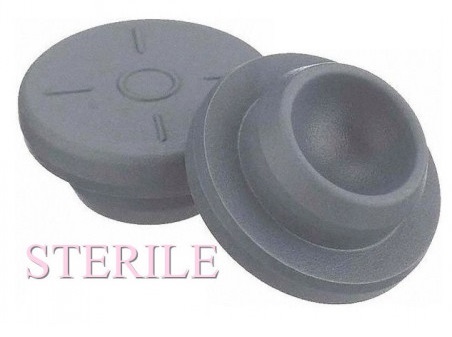
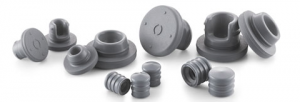
13mm and 20mm sterile vial stoppers from IVPACKS are washed with purified water, then gamma irradiated for sterility. Both sterility and endotoxin testing reports are available for all lots sold by IVPACKS.

Order STERILE VIAL STOPPERS – READY TO USE

Compounding Pharmacy Sterile Vials and Ready to Sterilize Vials

10ml sterile open depyrogenated vials

COMPOUNDING PHARMACY SUPPLIES by IVPACKS LLC

IVPACKS LLC offers compounding pharmacy customers sterile vials, ready to sterilize “pre-washed vials”, vial stoppers, sterile vial stoppers and pre-washed “ready to sterilize / ready for sterilization” vial stoppers, vial seals, West Pharmaceuticals FLIP OFF and Matte Seals, vial crimpers, and pharmaceutical grade sterilization filters.  CLICK HERE FOR COMPOUNDING PHARMACY VIAL PACKAGING

VIAL STOPPERS – Bromobutyl Rubber vs Chlorobutyl Rubber

Bromobutyl vs Chlorobutyl Vial Stoppers
Worldwide sales of chlorobutyl and bromobutyl vial stoppers from IVPACKS LLC

VIAL STOPPERS – Bromobutyl vs Chlorobutyl – ORDER HERE

In the US and European markets, serum vial stoppers are commonly available in both bromobutyl and chlorobutyl rubber for use in pharmaceutical packaging. Vulcanization (heating and curing) of natural rubber results in the cross-linking of individual polymer chains that forms a copolymer of isobutylene, and to a smaller extent, isoprene. The incorporation of a halogen (bromine or chlorine) in the vulcanization process results in the vulcanization rate being improved, blending and curing performance is improved, and the cross-link bonding property has also significantly improved. Each specific halogen offers its own unique characteristics to the finished product.

Bromobutyl Rubber: is a terpolymer of isobutylene, isoprene and brominated Isoprene.

Chlorobutyl Rubber: is a terpolymer of isobutylene, isoprene and chlorinated Isoprene.

Processing with Bromobutyl vs Chlorobutyl

  • When bromine is used as the halogen for producing bromobutyl rubber, it is generally added at a concentration of 2%; chlorine is added at a concentration of 1.1 – 1.5% in chlorobutyl rubber.
  • Bromine is more reactive than Chlorine, so a stabilizer is often added to the rubber (such as soybean oil at 1.3%). Chlorine, being more inert, does not require the use of any stabilizers.
  • The use of antioxidants (such as BHT) is approximately equal in both bromobutyl rubber and chlorobutyl rubber.

Advantages and Disadvantages: Bromobutyl vs Chlorobutyl

Bromobutyl Rubber

Advantages:

  • lower hygroscopicity and is a better choice for freeze dried / lyophilization product applications. Higher stability and generally have a longer shelf life.
  • faster cure rates and a shorter scorch or cure induction period (more efficient production)
  • requires lower levels of curatives and enables one to use a wider range of accelerators.

Disadvantages:

  • stabilizers are required in the production of bromobutyl rubber (such as soybean oil).
  • heat sensitivity is a greater concern with bromobutyl stoppers.

Chlorobutyl Rubber

Advantages:

  • better resistance to heat and is the preferred stopper for high-heat sterilization techniques.
  • efficiently produced without the use of stabilizers.

Disadvantages:

  • longer curing times, resulting in higher production costs

10ml Serum Vials Sterile Pyrogen Free Unsealed

  • 10ml sterile open depyrogenated vials
    10ml sterile open depyrogenated vials
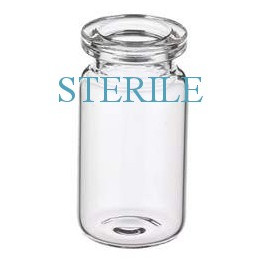
  • 10mL Clear Sterile Open Serum Vials – Washed, Depyrogenated, double bagged with plastic lid and tray. Sterilzed by Ethylene Oxide.
    Case of 435 pieces (3 separate bagged trays of 145pc each).
  • Measure 24x50mm with a standard 20mm crimp finish – not sealed and are not stoppered. Manufactured, pre-washed, depyrogenated and terminally sterilized by world recognized Gerresheimer.
  • Must be opened in the cleanroom.
  • IDEAL FOR COMPOUNDING PHARMACY USE

A completed C of C on Gerresheimer letterhead is available for all lots sold.
All cases of 435 pieces have a label showing:
GERRESHEIMER
Item No.: 62121S-10
The Lot / Batch Number
Quantity per ream
This information is then traceable to your paid invoice as well as the Gerresheimer C of C.

Sold as a case of 435 pieces: CLICK HERE TO ORDER OPEN STERILE VIALZ