
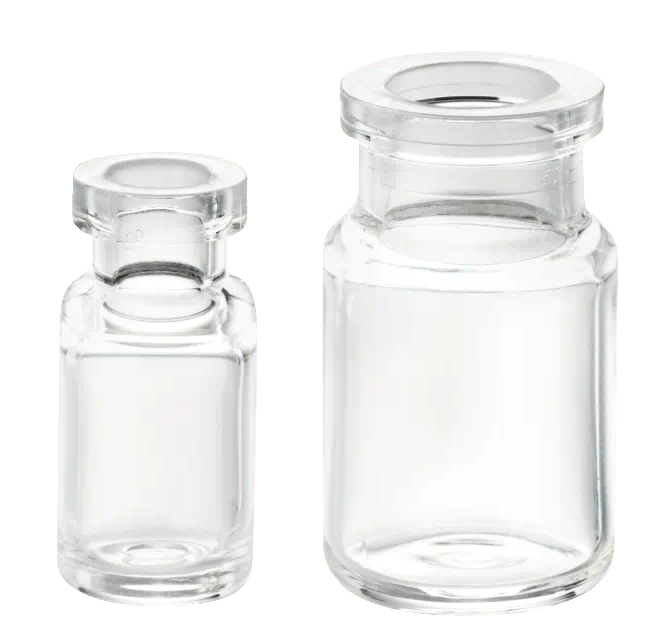
Cyclic olefin polymer (COP) vials offer significant advantages over traditional glass vials for cryogenic, biological, and pharmaceutical packaging, particularly for sensitive drug products. COP Vials are available at IVPACKS for clients worldwide.
Benefits of COP Vials:
· Enhanced Integrity at Low Temperatures: COP vials maintain container closure integrity (CCI) at ultra-low (cryogenic) temperatures, which is crucial for sensitive biologics and cell therapies. Unlike glass, which can become brittle and lose CCI due to differing thermal expansion rates between glass and rubber stoppers, COP and rubber shrink at comparable rates, preventing gap formation [COP Vials at pda.org].
· Reduced Breakage Risk: Glass is inherently brittle, and this brittleness increases at low temperatures, making it prone to fracture during handling and shipping. COP vials are fracture-resistant, leading to fewer product losses and enhanced safety [pharmaceuticalonline.com].
· Minimal Drug Interaction: COP is highly inert, meaning it has a lower propensity to interact with the drug product. Glass, on the other hand, can leach substances or experience delamination (shedding of glass flakes), potentially compromising drug efficacy and safety. The FDA has even issued advisories regarding delamination with glass vials [COP Vials discussion at pda.org].
· Superior Barrier Properties: COP vials offer good resistance to oxygen and water, which helps protect oxygen-sensitive and moisture-sensitive medications [pharmaceuticalonline.com, industryintel.com].
· Clarity and Transparency: Despite being a polymer, COP maintains excellent clarity, similar to glass, allowing for easy visual inspection of the contents [industryintel.com].
These combined features make COP vials a favorable alternative to glass vials for storing and delivering advanced biologic drugs that require stringent packaging and storage conditions [pharmaceuticalonline.com, pda.org].
Scientific Literature References:
· Lyness, A. M., Kraft, C. L., Picken, A., Harriman, J., & Thomas, R. (2018). Evaluation of a novel cyclic olefin polymer container system for the cryopreservation of adherent and suspension human cell types. Cytotherapy, 20(5), S67 [isct-cytotherapy.org].
· McCaw, J. (2018). Glass Versus Cyclic Olefin Polymers - Container Closure Integrity in Cryogenic Storage Environments. Parenteral Drug Association [pda.org].
· Winters, W. (n.d.). When Glass Vials Fail At Low Temperatures, Consider A Cyclic Olefin Polymer System. West Pharmaceutical Services, Inc [pharmaceuticalonline.com].